



 MOVIE · 1959
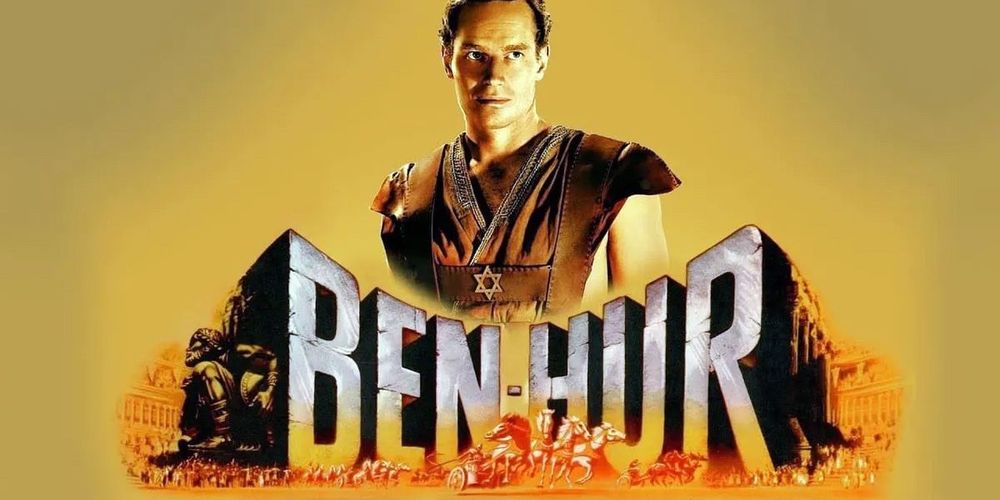
Ben-Hur (1959)
Fate and adventure collide in the "epic and awe-inspiring" story of Judah Ben-Hur, a prince who is enslaved by the Romans after being betrayed by his adopted brother Messala.
Oops! Is this show WOKE?
Only an account holder or member can file. Cite a scene, a line, or a pattern. Other account holders +1 or −1 that argument, once each. The show is not WOKE until enough of them have given a +1. Enough −1s remove the write-up, and it is no longer shown.
Sign in to file a woke label. One of each criterion per member.
Comments and reviews
Report a mistake
Same rule as woke labels: one report, a written reason, and the community +1 or −1 it — once per member. A net +5 applies the change. Editors can hold it for review, or apply it immediately.
No mistake reports yet.
Sign in to report a mistake. One report per field, per member.
Member review
Dan Reilly Member
Oct 16, 2026
★★★★★★★★★★Ben-Hur runs long enough that you feel every minute of the early stretches. The setup in Jerusalem goes on with family gatherings and political talk that could have been tightened without losing the point. Judah’s fall from prince to slave happens after the betrayal, and the sea galley sequences drag more than they need to. Messala’s shift from brother figure to enemy feels abrupt once the tile incident hits, and some of the dialogue in those scenes lands with the weight of a stage play rather than something that breathes. The romantic thread with Esther never quite catches fire for me either; it sits there as duty more than spark. I kept checking the clock during the desert march and the early prison bits, wondering if the movie trusted its own story enough to move faster.
That said, once the story locks into the bigger canvas it earns the time. The scale of the Roman world and the way Judah gets pulled through it still works. You see a man stripped of everything and then clawing back status through sheer refusal to break. The chariot race is the obvious standout, and it holds up because the cameras stay close enough to the wheels and the dirt that you feel the risk instead of just watching pretty horses. The crashes land hard, the dust and noise sell the danger, and the rivalry with Messala finally gets the payoff the earlier scenes only hinted at. Heston carries the physical side of it well; he looks like someone who has been through the galleys and the desert rather than an actor who stepped out of makeup. The supporting faces around him, especially the ones who stay after the race, give the later passages some ground to stand on.
What surprised me on this watch is how the faith elements sit without turning the whole thing into a sermon. They arrive late and stay mostly quiet, tied to the idea of mercy and the cost of holding a grudge rather than waving a flag. Judah’s arc from revenge to something closer to release feels earned by the time the story winds down, even if a couple of the miracles edge toward convenience. The music helps more than it distracts; it swells when the picture needs lift and stays out of the way during the quieter reckonings. I went in expecting pure spectacle and left remembering the personal score-settling more than the legions and banners.
The production still shows its age in places—the process shots on the sea and a few matte lines—but the practical work on the race and the crowd scenes makes up for it. You can tell they built real sets and put real bodies in them. That kind of commitment shows. I don’t love every subplot or every speech, and I still think a sharper cut of the first hour would have helped, yet the core story of a man watching his world get taken and then deciding what kind of man he will be on the other side keeps its pull. It is not perfect, and it is not subtle about its size, but it delivers the weight it promises once it gets moving. Four stars feels right: strong enough that I would sit through it again, flawed enough that I would skip the slowest stretches if someone handed me a remote.