



 TV · 2024
Before
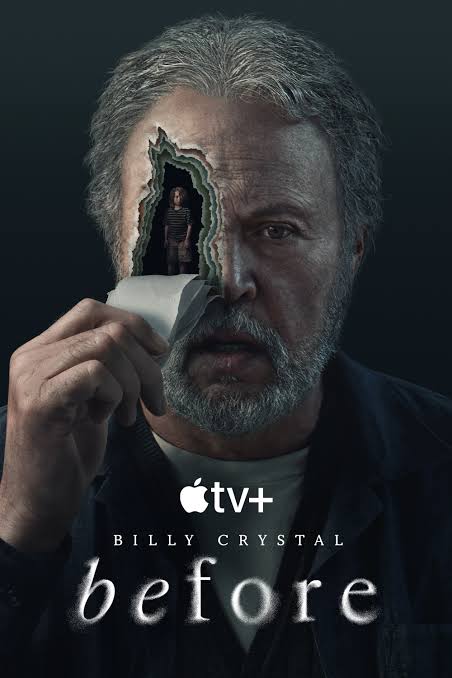
After tragically losing his wife to suicide, child psychiatrist Eli Adler encounters a troubled young boy who seems to have a haunting connection to Eli’s past.
The story centers on Eli, a grieving child psychiatrist who is deeply struggling to cope with the recent, tragic suicide of his wife, Lynn. His life takes a dark and unsettling turn when he encounters Noah, a deeply troubled, non-verbal young boy who shows up at his doorstep. Noah exhibits severe, unexplainable behavioral issues, scratches his own skin raw, and has violent, trance-like episodes where he speaks in an ancient, forgotten language. Recognizing that the boy is in desperate need of psychiatric help, Eli takes him on as a patient, only to realize that Noah possesses an uncanny, haunting familiarity.
As Eli digs deeper into Noah’s psyche, he uncovers an inexplicable, supernatural connection between the boy's terrifying visions and his own hidden past. The boundaries between psychiatric science and paranormal dread blur as Noah begins mirroring fragments of Lynn's final days, forcing Eli to confront deeply buried trauma and unresolved guilt. Each therapy session brings forth haunting hallucinations, tying the boy's torment directly to Eli's own history. Ultimately, Eli must untangle the eerie, otherworldly bond he shares with the child in order to uncover the truth of what really happened to his wife and save Noah before they are both entirely consumed by the darkness.
Click any of the following icons below to rent or stream it!
Oops! Is this show WOKE?
Only an account holder or member can file. Cite a scene, a line, or a pattern. Other account holders +1 or −1 that argument, once each. The show is not WOKE until enough of them have given a +1. Enough −1s remove the write-up, and it is no longer shown.
Sign in to file a woke label. One of each criterion per member.
Comments and reviews
Report a mistake
Same rule as woke labels: one report, a written reason, and the community +1 or −1 it — once per member. A net +5 applies the change. Editors can hold it for review, or apply it immediately.
No mistake reports yet.
Sign in to report a mistake. One report per field, per member.
Member review
Wes Calder Member
Oct 7, 2026
★★★★★★★★★★I settled on 4 for Before after sitting with it for a few days. The premise is the kind that usually tips into either pure melodrama or cheap jumps, and this one mostly avoids both. Eli Adler is a child psychiatrist who has just lost his wife to suicide, and the boy who appears at his door carries enough unexplained weight that you understand why the man keeps showing up for sessions even when his own life is barely holding together. The scratching, the non-verbal stretches, the sudden ancient language during those trance states—it all lands with a certain quiet force because the show does not underline every beat.
What works is how little it rushes the connection between Noah and Eli’s past. You get the sense of something inherited or circling back without a stack of exposition dumps. The sessions themselves feel like actual clinical work at first, awkward silences and all, before the edges start to blur. I appreciated that the writing trusts the audience to notice the parallels instead of spelling them out in capital letters. Crystal plays Eli with a kind of contained exhaustion that never turns into a performance of grief. He just looks like a man who has stopped sleeping properly and is trying to keep the professional frame intact for as long as he can. That restraint keeps the whole thing from becoming soggy.
The atmosphere leans cold and slightly off-kilter rather than gothic. Rooms feel too quiet. Conversations trail off. When the boy’s episodes hit, the camera stays close enough that you register the physical cost without turning it into spectacle. I liked that choice. It makes the supernatural suggestion sit inside a realistic frame instead of floating above it. A few supporting characters drift in and out—colleagues, family remnants—and most of them serve the story without needing big arias of their own. One or two scenes with the extended circle felt underwritten, but they did not pull the center off balance.
Pacing is deliberate. Some episodes breathe longer than necessary, and there are stretches where you wonder if the mystery is being protected a little too carefully. Still, the patience pays off more often than it frustrates. By the middle stretch the questions about what Noah actually carries start to feel personal to Eli rather than generic haunting tropes. The show understands that grief can make a person receptive to patterns that would look absurd under normal light, and it uses that without turning the psychiatrist into a pure believer or a pure skeptic. He stays in the middle, which is harder to write and more interesting to watch.
I did not need every thread tied in a bow, and the series mostly respects that. A couple of later turns lean harder on the uncanny than the early episodes suggest they will, yet even then the tone stays measured. No sudden shift into horror-movie grammar. The ancient language bits could have been gimmicky; instead they feel like another symptom the adults are failing to catalog properly. That failure is part of the point. Professionals keep applying the tools they know while something older and less cooperative sits in the room.
There is a dry humor in how ordinary the domestic details remain. Coffee goes cold. Messages go unanswered. The world outside the sessions continues its indifferent pace. That contrast helps the stranger elements register. I found myself thinking about the show after the credits more than I expected to. Not because it reinvented the grieving-man-meets-troubled-child template, but because it executed the template with enough care and enough silence that the familiar pieces still landed.
If you come looking for constant escalation or a parade of twists, you will probably find it slow. If you can sit with a story that lets dread accumulate through small incongruities and unfinished conversations, it holds. The central pairing carries most of the load, and both performances stay grounded enough that the premise never feels ridiculous. I have seen versions of this setup collapse under their own seriousness; this one does not. It earns the four stars by knowing when to hold back and when to let the quieter details do the work. Worth the time if the subject matter is not a hard pass for you. I would watch it again on a gray weekend, which is about as strong a recommendation as I usually give.