




 TV · 2018
Barry IS WOKE
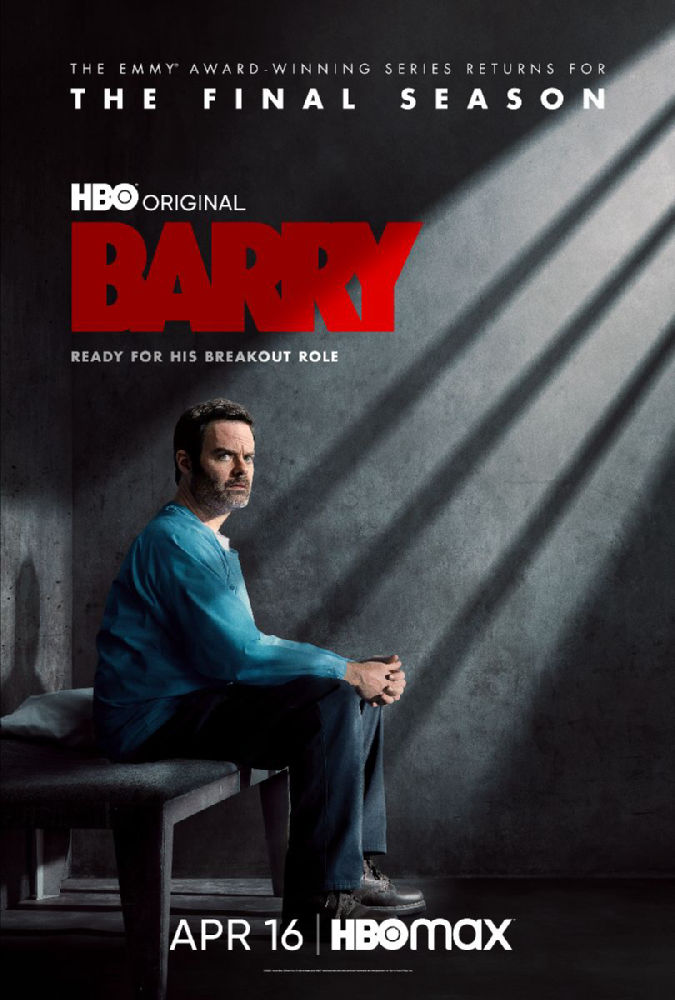
Barry follows a Midwestern hitman who moves to Los Angeles and becomes immersed in the local theater community while struggling to escape his criminal past.
Barry centers on Barry Berkman, a depressed contract killer from the Midwest who travels to Los Angeles to complete a job and then enrolls in an acting class taught by Gene Cousineau. Barry hopes the class will give him a fresh start away from his handler Monroe Fuches and the violence of his old life. He meets aspiring actress Sally Reed and other students who pull him deeper into the city's struggling theater scene. Barry's attempts to hide his background create tension as he balances auditions with sudden calls back to his old profession.
As Barry improves as an actor, his past catches up through Fuches and a Chechen mob connection named NoHo Hank. Barry tries to protect his new friends while completing hits that threaten to expose him. The series follows his growing internal conflict between the quiet life he wants and the lethal skills that keep pulling him back into danger.
Click any of the following icons below to rent or stream it!
WHAT CRITERIA MAKES IT WOKE?

Oops! Is this show WOKE?
Only an account holder or member can file. Cite a scene, a line, or a pattern. Other account holders +1 or −1 that argument, once each. The show is not WOKE until enough of them have given a +1. Enough −1s remove the write-up, and it is no longer shown.
Sign in to file a woke label. One of each criterion per member.
Comments and reviews
Report a mistake
Same rule as woke labels: one report, a written reason, and the community +1 or −1 it — once per member. A net +5 applies the change. Editors can hold it for review, or apply it immediately.
No mistake reports yet.
Sign in to report a mistake. One report per field, per member.
Member review
Toni Briggs Member
Oct 19, 2026
★★★★★★★★★★Barry grabbed me faster than I expected. A Midwestern hitman lands in Los Angeles, joins an acting class, and tries to quit the killing while the old life keeps calling. That premise could have been pure gimmick, yet the show treats Barry’s depression and his half-hearted hope for a clean start as something that actually costs him. Bill Hader plays the guy like someone who knows the joke is on him every time he walks into a rehearsal room or picks up a burner phone. I liked that the violence never fully leaves the frame; it just sits there waiting while he botches monologues and tries to care about other people’s feelings.
The comedy works for me because the awkward stretches have teeth. Long silences in the acting class or during a stakeout don’t just sit there being “quirky.” They remind you how little these people understand each other and how close the next body is. I have seen the comparison to slicker crime talk, the kind where two killers chat about nothing important right before a hit and the banter raises the stakes. Barry does the opposite sometimes and lets the limp energy drain the room on purpose. That choice will lose some people who want constant snap. For me it made the sudden return of blood feel worse, not cheaper. The theater kids themselves are exactly as shallow, self-absorbed, and thick as the rest of us already assume actors can be. The show does not pretend otherwise, and that honesty is part of why the satire lands instead of begging for sympathy.
What keeps the whole thing from turning into pure misery is the comedy background under it. You feel it in the timing. Barry keeps trying to wash the murder off and live normal, developing real attachments instead of just using people, yet he fails at every turn. The show stays funnier and less predatory than other stories that chase the same “killer wants a regular life” idea. No endless stalking loop. Just a guy who wants the class and Sally and a future that will not take him back, and who keeps getting pulled into jobs anyway. That tension is the engine.
I still have to talk about the part that marks it as woke. NoHo Hank is not comic relief on the margins. He sits in the small core cast as a main recurring character, and the writers give his same-sex romance with Cristobal real narrative focus and screen time across multiple seasons. It is not a throwaway detail or a quiet background beat. The relationship keeps getting scenes, arcs, and emotional weight as if it belongs at the center of the found-family story they are telling. I noticed it every time the show cut away from Barry’s mess or the Chechen chaos to linger on Hank and Cristobal’s coupledom. It did not wreck the series for me, but it is the clearest example of the creators making sure that thread stayed visible and important. In a show that is otherwise pretty sharp about self-delusion and failed reinvention, that choice feels like an extra priority layered on top.
Even with that, the performances carry a lot. Henry Winkler’s Gene Cousineau is ridiculous and magnetic at once, a washed-up teacher who still believes the work matters. Fuches is pure parasitic slime and I enjoyed every second of hating him. The hits themselves stay ugly instead of stylish. Barry never gets the clean slate he wants, and the show refuses to pretend the bodies stop mattering once he books an audition. That honesty is why I stuck with it through the slower patches. Some episodes do lean too hard on dead air and lose momentum, and the LA theater world can feel like the same narcissism loop repeated. Still, the central idea holds: you cannot act your way out of what you have already done when the people who own you keep showing up.
I gave it four stars because the lead performance, the dark comic balance, and the refusal to redeem Barry easily outweigh the preachier structural choices. It is not flawless. It is not pure pulp either. It is a strange little series that understands how badly people want to rewrite themselves and how rarely that works. The Hank and Cristobal material remains the part that feels most inserted for contemporary points, yet the rest of the machine runs well enough that I finished it glad I watched. If you can live with a hitman story that keeps one foot in the green room and one foot in the trunk of a car, this one earns the time.