
 TV
 VIDEO GAMES
 PODCASTS
 VIDCASTS
 STAND-UP


 MOVIE · 1982
Annie (1982)
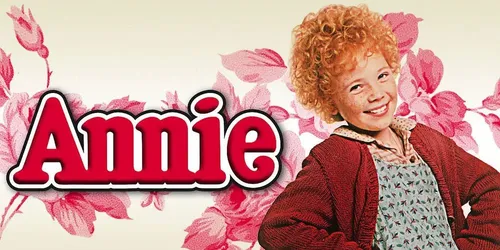
ANNIE is the story of a plucky, red-haired girl who dreams of life outside her dreary orphanage. One day, Annie (Aileen Quinn) is chosen to stay for one week with the famous billionaire "Daddy" Warbucks (Albert Finney). One week turns into many and the only person standing in the way of Annie's fun is Miss Hannigan, the gin-soaked ruler of the orphanage (played to hilarious perfection by Carol Burnett). Will Miss Hannigan's zany attempts to kidnap the irrepressible Annie succeed? Enjoy all the unforgettable songs, including "It's A Hard Knock Life" and "Tomorrow."
Oops! Is this show WOKE?
Only an account holder or member can file. Cite a scene, a line, or a pattern. Other account holders +1 or −1 that argument, once each. The show is not IS WOKE until enough of them have given a +1. Enough −1s remove the write-up, and it is no longer shown.
Sign in to file a woke label. One of each criterion per member.
Comments and reviews
Report a mistake
Same rule as woke labels: one report, a written reason, and the community +1 or −1 it — once per member. A net +5 applies the change. Editors can hold it for review, or apply it immediately.
No mistake reports yet.
Sign in to report a mistake. One report per field, per member.
Member review
Becky Soto
Oct 16, 2026
7/10I put on Annie the other night mostly because I wanted something bright after a long week, and it mostly delivered that feeling without asking too much of me. I’m rating it 3.5 because I genuinely enjoy large stretches of it and still find myself humming the big numbers days later, yet it never quite becomes the seamless comfort watch I hoped for. There’s a warmth running through the whole thing that feels honest rather than manufactured, and that counts for a lot with me. What stuck with me most this time was the orphanage early on. The girls belting out “It’s a Hard Knock Life” while scrubbing floors and making the place look worse than it started somehow lands as both funny and a little sad. Aileen Quinn has that open, freckled face that sells the pluck without turning Annie into a cartoon. You believe she really does keep hoping even when the room is cold and Miss Hannigan is halfway through another bottle. Carol Burnett steals every second she’s on screen. She plays Hannigan so loose and gin-soaked that you laugh at the scheming and still catch a flicker of how lonely and small the woman is. That balance is harder than it looks, and Burnett makes it look easy. Albert Finney as Daddy Warbucks surprised me. I expected a stiff rich-guy caricature, but he brings a gruff softness that grows on you. The moment he starts softening toward Annie feels earned rather than sudden. Their scenes around the mansion have this easy rhythm—big rooms, fancy food, a kid who can’t stop asking questions—and Finney never overplays the conversion. I liked how the movie lets him stay a little awkward about affection instead of flipping a switch. The supporting bits with the staff and the city folks help fill out that world without crowding it. The songs are the real glue. “Tomorrow” still works on me every single time. Quinn sings it like she’s talking herself into believing it, not performing for an audience, and that difference matters. I caught myself smiling at the window scene more than I expected. The bigger production numbers have energy and color, though a few of them stretch longer than they need to. That’s part of why I landed at 3.5 instead of higher. Some sequences feel like the movie is checking boxes for spectacle when a tighter cut would have kept the heart front and center. The kidnapping plot with Hannigan and her brother gets goofy in a way that undercuts the earlier sweetness, and I found myself waiting for it to wrap so we could get back to Annie and Warbucks simply existing in the same space. Still, the core friendship holds. There’s a quiet beat near the end where Annie looks around at the life she’s stumbled into and you can see her deciding it’s real. No big speech, just a look. That landed harder for me than any of the chase business. I also appreciated that the film doesn’t try to modernize itself into something it isn’t. It stays a bright, slightly messy musical about a kid who wants a home and a lonely man who discovers he has room for one. No lectures, no forced updates, just the story as it was built. Watching it now, I notice how the orphanage girls bounce off each other with real kid energy. They aren’t polished performers first; they’re a pack of kids making noise and looking out for one another in small ways. That texture keeps the early reels from feeling like pure sugar. When Annie finally leaves for the week with Warbucks, you feel the hole she leaves behind even while you’re rooting for her. Later, when things threaten to go sideways, that same loyalty bubbles back up in small gestures that feel true to the world they built. I won’t pretend every choice works. The runtime could lose fifteen minutes without hurting anything important, and a couple of the comic side plots wander. Yet the things that work—Quinn’s steady optimism, Burnett’s glorious mess of a performance, Finney’s slow thaw, and those songs that still stick—outweigh the soft spots. I finished the movie feeling lighter than when I started, which is exactly what I needed. It’s the kind of film I’ll put on again when I want color and melody and a reminder that hoping out loud still has power. Not perfect, not trying to be edgy or rewritten for today’s arguments, just a solid, sunny piece of entertainment that earns its 3.5 from me by staying itself. I’ll keep the good scenes and the tunes and forgive the rest.