



 TV · 2018
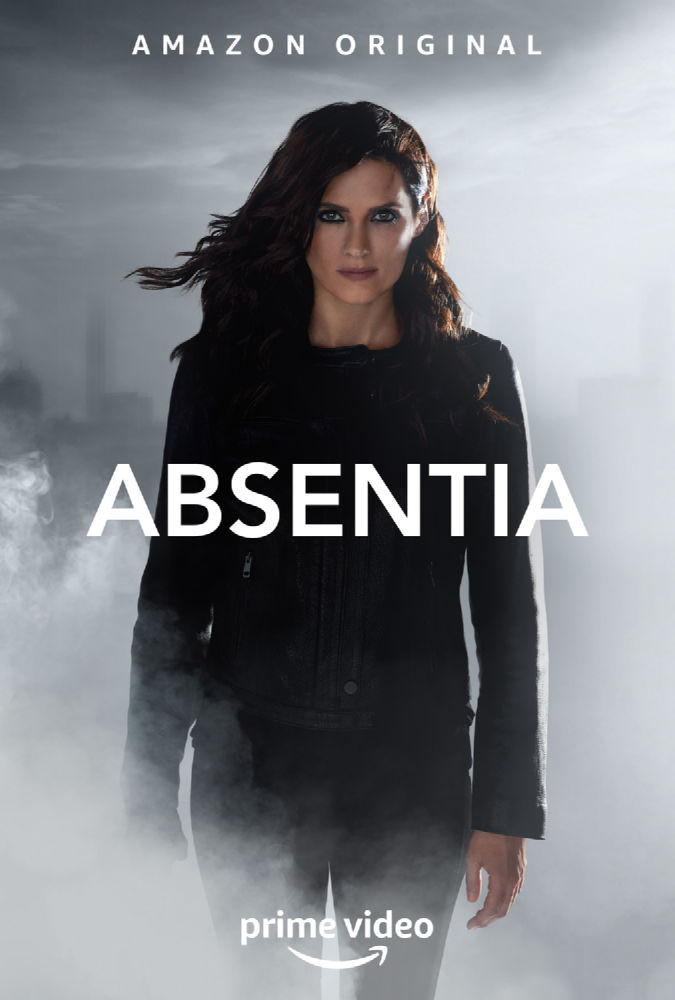
Absentia
She disappeared. No one heard from her for six years. No one knows what happened to her, not even her. An FBI Agent tracking a Boston serial killer vanishes, and is declared dead. Six years later, she is found in a cabin in the woods, with no memory of what happened during the time she went missing. She comes back to a husband who has remarried, and whose wife is raising her son. She will have to navigate in her new reality, and she will soon find herself implicated in a new series of murders.
Click any of the following icons below to rent or stream it!
Oops! Is this show WOKE?
Only an account holder or member can file. Cite a scene, a line, or a pattern. Other account holders +1 or −1 that argument, once each. The show is not WOKE until enough of them have given a +1. Enough −1s remove the write-up, and it is no longer shown.
Sign in to file a woke label. One of each criterion per member.
Comments and reviews
Report a mistake
Same rule as woke labels: one report, a written reason, and the community +1 or −1 it — once per member. A net +5 applies the change. Editors can hold it for review, or apply it immediately.
No mistake reports yet.
Sign in to report a mistake. One report per field, per member.
Member review
Omar Quill Member
Oct 19, 2026
★★★★★★★★★★Absentia sat on my list for a while because the setup sounded like one of those mid-length story campaigns that look great on the box art and then turn into a grind once you are twenty hours in. FBI agent Emily Byrne walks back into her life after six years of being missing and legally dead. Husband has a new wife and a kid. Old case files still open. Serial killer threads that never really stayed buried. That is enough to get me to hit play. I finished the run and landed at 3.5 without much second-guessing.
Stana Katic carries a lot of the weight. I mostly knew her from Castle, so seeing her play someone this broken and stubborn felt like a clean change of pace. She does the physical leftover damage well—the way Emily moves like her body still expects the next hit, the way she stares too long at people who used to be family. The rest of the cast holds up around her. Nobody feels like they wandered in from a different show. The problem is the writing keeps leaning on the same dark filter and the same quiet-room tension until it starts to feel like the game is stuck in one atmosphere preset and refuses to change the lighting.
The family side is the part that actually sticks with me. Nick rebuilt a whole life. Alice is not a cartoon villain. The kid does not magically bond with the woman who just reappeared. That triangle stays uncomfortable in a way that feels honest instead of engineered for monologues. Emily trying to prove she is still the investigator she used to be while everything personal is sideways is stronger than most of the conspiracy branching. When the show stays on those conversations and the small betrayals, it works. When it pivots hard into the wider network that used her disappearance, the plotting gets baggy. Leads point outward, then sideways, then back to people you already half-suspected. It is the kind of structure that keeps promising a big boss fight and then gives you three more mid-tier encounters first.
I kept thinking about long RPG builds while I watched. You invest time into Emily’s recovery and her old contacts and her brother Jack, and some of those threads pay off cleanly. Others just sit there eating hours. The serial-killer case that originally swallowed her has enough meat, but the show keeps widening the map until the focus gets soft. Dark atmosphere is fine. Endless dark atmosphere with the same score cues and the same rain-soaked streets starts to feel like the developers only unlocked one weather option. A couple of twists land. A couple feel like they were added so the season would not end too early.
Pacing is the other place it loses me. Early episodes move with purpose. Middle stretch turns into a lot of walking the same corridors—interrogations, late-night stakeouts, people withholding the obvious next piece of information. I play enough games that I can feel when a questline is padding the runtime. Absentia does that. Not constantly, but enough that I checked the episode count more than once. The acting stays solid even when the script is spinning wheels, which is why I did not drop lower than 3.5. Katic and the core group keep the scenes watchable. You believe Emily wants answers and also wants her old life back and also knows neither thing is cleanly available. That conflict is the real engine.
I never got the sense the show was trying to lecture me about anything outside the story. It stays inside Emily’s return, the remarriage fallout, and the case that keeps expanding. No forced identity checklist, no shrinking the men so the lead can look taller. Just a messy personal situation wrapped around a procedural that wants to be a conspiracy thriller. That simplicity helped. When modern shows start swapping character work for messaging I bounce hard. This one did not do that. It just overcooked the gloom and undercooked the payoff structure.
By the time the larger network comes into focus, I cared more about whether Emily could stand in the same room as Nick and Alice without everything collapsing than I cared about the next coded message or shadowy handler. The personal stakes feel lived-in. The plot machinery feels assembled. That split is basically why 3.5 feels right. Strong enough premise and performances that I finished it. Not sharp enough in the writing or the rhythm that I would restart it tomorrow. If you like tense family drama with crime edges and you can live with a show that stays locked in one moody gear, it is worth the hours. If you need tighter plotting or more variety in tone, you will feel the drag the same way I did.
I keep half an eye on shows like this the way I keep half an eye on mid-tier games with good character writing and uneven quest design. You finish them, you remember a few scenes, you move on. Absentia left me with Emily’s face in those quiet moments after another dead end, and with the weird politeness of a house that used to be hers. That is enough to land above average. It is not enough to pretend the whole thing held together cleanly. Solid cast, interesting starting hook, execution that levels off instead of climbing. That is my take, and that is the score.