
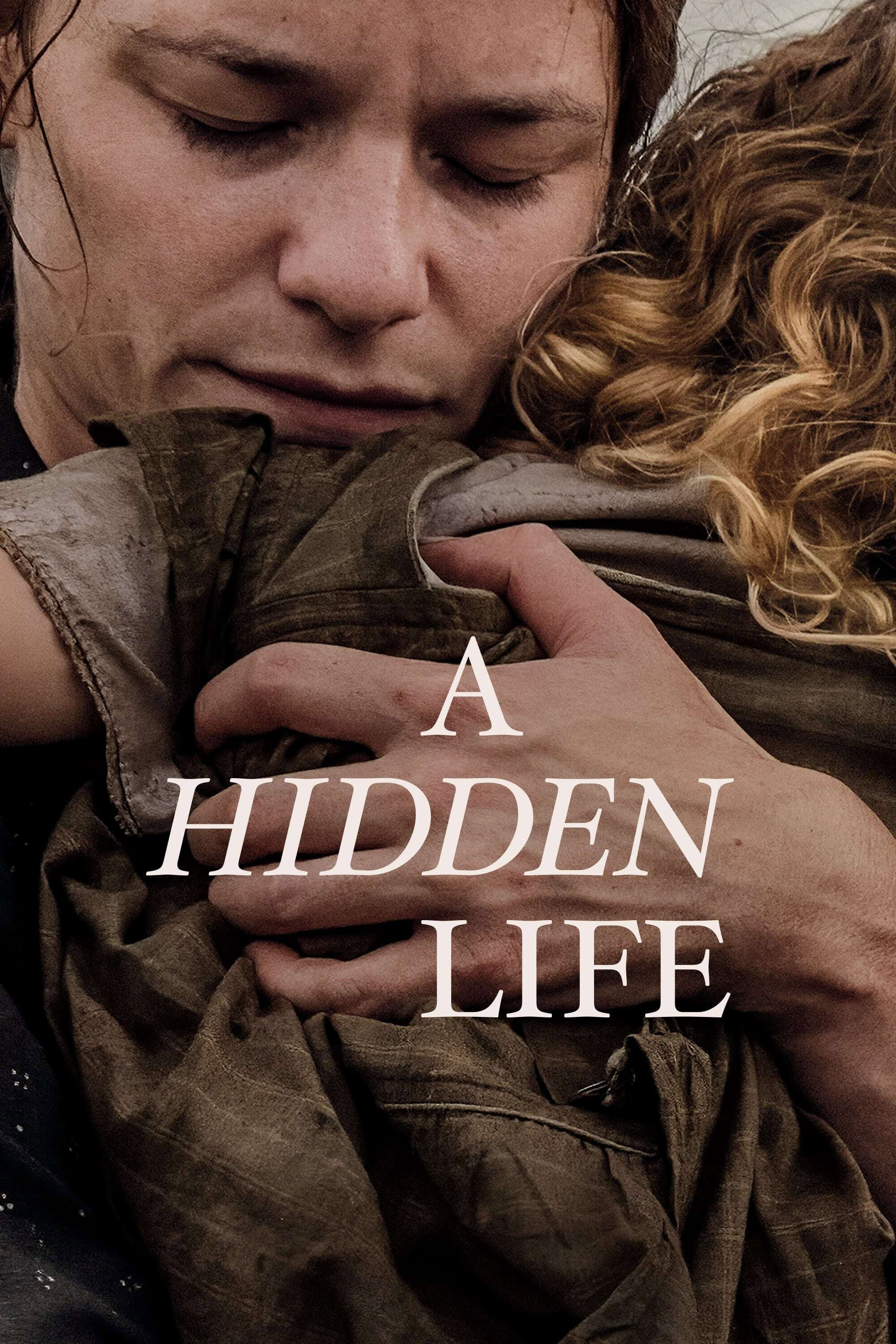



 MOVIE · 2019
A Hidden Life
Based on real events, from visionary writer-director Terrence Malick, A HIDDEN LIFE is the story of an unsung hero, Franz Jägerstätter, who refused to fight for the Nazis in World War II. When the Austrian peasant farmer is faced with the threat of execution for treason, it is his unwavering faith and his love for his wife Fani and children that keeps his spirit alive.
Oops! Is this show WOKE?
Only an account holder or member can file. Cite a scene, a line, or a pattern. Other account holders +1 or −1 that argument, once each. The show is not WOKE until enough of them have given a +1. Enough −1s remove the write-up, and it is no longer shown.
Sign in to file a woke label. One of each criterion per member.
Comments and reviews
Report a mistake
Same rule as woke labels: one report, a written reason, and the community +1 or −1 it — once per member. A net +5 applies the change. Editors can hold it for review, or apply it immediately.
No mistake reports yet.
Sign in to report a mistake. One report per field, per member.
Member review
June Pell Member
Oct 6, 2026
★★★★★★★★★★A Hidden Life centers on Franz Jägerstätter, an Austrian farmer whose refusal to swear allegiance to Hitler sets him apart in his village during the war years. The story stays close to his daily life with his wife and daughters, the fields they tend, and the quiet routines that make the later choice feel grounded rather than abstract. What stands out is how the film lets the decision unfold through small moments of hesitation and conversation instead of big speeches. Franz listens to the priest, the mayor, and neighbors who all push him to sign for the sake of his family, and those exchanges show the cost without turning anyone into a simple villain.
The mountain setting does a lot of the work. Long shots of the Alps and the village streets give a sense of isolation that matches Franz’s position once he returns home from training. You get the feeling that everyone knows everyone else’s business, which makes his stand harder to sustain. The family scenes are understated, showing Franziska managing the farm and the children while letters pass between them. Those details keep the focus on ordinary endurance rather than dramatic confrontation.
At the same time the film runs long. Scenes sometimes hold on faces or landscapes past the point where the point has landed, and that stretches the middle sections. It is not that the images are weak, but the repetition can pull attention away from the moral questions. A tighter cut might have kept the weight without asking the viewer to sit through so many similar beats.
Faith is treated as a lived habit rather than a sudden inspiration. Franz prays, reads scripture, and talks with his wife about what his beliefs require. The film does not present this as heroic in a loud way; it shows the practical result, which is prison and separation. That restraint avoids turning the story into a lesson, though it also leaves some viewers wanting more direct argument about why the oath mattered so much to him.
The village reaction feels believable. People who once shared meals now distance themselves, and the shift happens gradually as news of the war reaches them. No one is shown as cartoonishly cruel, which makes the pressure on Franz more convincing. His wife bears the brunt in the community, and the film gives her space to show both loyalty and fatigue without making her a symbol.
What lingers is the sense that conscience can cut someone off from the life they built. Franz does not appear to seek martyrdom; he simply reaches a point where signing feels impossible. The film respects that boundary without explaining it away or dressing it up. At the same time the length and deliberate pace ask for patience that not every viewer will bring. The result is a steady, sometimes uneven look at one man’s limit and what it costs the people around him. The performances hold to the same quiet register. August Diehl gives Franz a stubbornness that settles in through posture and silence more than speeches, while Valerie Pachner lets Franziska’s exhaustion and resolve share the same frame without tipping into pure nobility. Their separation is felt most in the ordinary details—the way a letter is opened, the way work continues on the slope—rather than in heightened farewell scenes.
Malick’s camera still drifts toward light on grass or the edge of a face long after the beat has landed, and that habit both deepens the solitude and occasionally empties it. The sound stays spare: wind, footsteps, the scrape of tools. It suits the material, yet the stretches between stronger passages can thin out. Keeping the machinery of the war mostly off-screen protects the intimate scale, though it also means the stakes sometimes rest more on atmosphere than on concrete pressure. The prison sections gain a harder edge precisely because the earlier village life has been so carefully established; the contrast does not need underlining.
By the later passages the accumulation of held shots and repeated conversations starts to clarify the film’s real interest: not the glamour of defiance but the way one refusal rearranges a household and a valley. The unevenness never fully leaves, yet the patience it asks for occasionally returns a moment of plain stillness that feels earned rather than imposed. Viewers already tuned to this late style will take the length as part of the texture; others will feel the same ground covered more than once. What stays after the credits is less an invitation to admire than a record of a breaking point reached without flourish. The film trusts silence over explanation, and that trust is only partly repaid, but the parts that hold do so because they stay close to work, weather, and the slow cost of saying no.