



 MOVIE · 1951
A Christmas Carol (1951)
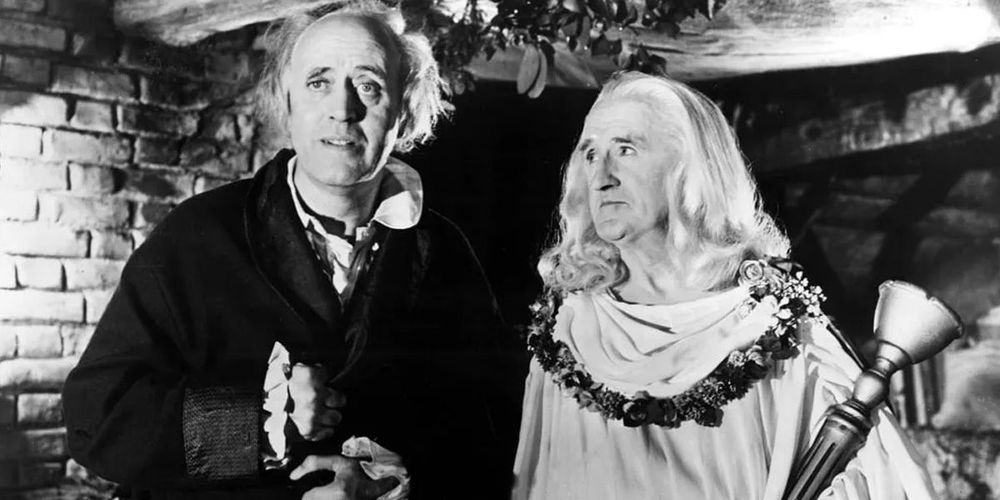
A modern day gritty retelling of Charles Dickens' classic novel about an old bitter miser taken on a journey of self-redemption, courtesy of three mysterious spirits that a visit on Christmas Eve.
Oops! Is this show WOKE?
Only an account holder or member can file. Cite a scene, a line, or a pattern. Other account holders +1 or −1 that argument, once each. The show is not WOKE until enough of them have given a +1. Enough −1s remove the write-up, and it is no longer shown.
Sign in to file a woke label. One of each criterion per member.
Comments and reviews
Report a mistake
Same rule as woke labels: one report, a written reason, and the community +1 or −1 it — once per member. A net +5 applies the change. Editors can hold it for review, or apply it immediately.
No mistake reports yet.
Sign in to report a mistake. One report per field, per member.
Member review
Becky Soto Member
Oct 16, 2026
★★★★★★★★★★I put on A Christmas Carol from 1951 the other night because the cold weather finally settled in and I wanted something that felt like Christmas without any of the shiny modern padding. Alastair Sim’s Scrooge just settles into the room differently than most versions. He starts so shut down and sharp that you almost root against him a little, and then the whole thing works on him in stages until you catch yourself smiling at the same man. That shift is what stayed with me.
There is a moment early with Marley’s ghost that still gives me a small chill even though I know every beat. The chains, the regret in the voice, the way Scrooge tries to talk his way out of believing what he is seeing. Sim plays the fear and the stubbornness at the same time, and it feels honest rather than theatrical. I found myself leaning forward the same way I did the first time I saw it years ago. Then the spirits arrive and each one peels another layer without ever turning the story into a lecture. The Ghost of Christmas Past brings those quiet, almost tender scenes of young Scrooge and the choices that hardened him. I always pause a little longer on the bit where he watches his younger self let love slip away. It is not overplayed. It just sits there, and you feel the weight of it with him.
What I like about this version is how grounded the redemption feels. When Scrooge finally wakes on Christmas morning, the joy is big but it is not cartoonish. He is still recognizably the same man, only lighter. The way he teases Bob Cratchit about being late and then raises his salary is pure delight. I laughed out loud in my living room. Tiny Tim’s part never feels sticky-sweet either. The family dinner scenes have warmth and ordinary clutter, the kind of ordinary happiness Scrooge had forgotten how to notice. That contrast is what makes the change land for me. You see what he almost missed, and you feel glad he did not.
I have watched a few later takes on the same story, and some of them rush the spirits or lean too hard on spectacle. This one trusts the source and trusts Sim to carry the emotional turn. The black-and-white photography helps; the fog and the London streets look properly cold and a little lonely until the Christmas morning light arrives. Nothing feels forced. Even the smaller characters, the ones who only appear for a scene or two, feel like they belong to a real neighborhood rather than a stage set. Mrs. Cratchit has that quiet dignity, and Fred’s invitation keeps coming back like a gentle reminder that kindness can be stubborn too.
I rated it four stars because it still works on me after all these years. It is not perfect—there are a couple of stretches that move a little slower than modern pacing prefers—but the heart of it is solid. I care about Scrooge’s change every single time. That final burst of generosity, the way he practically dances through the streets, makes me want to be a little more open-handed myself. I do not mean that in a syrupy way. It just leaves a clean feeling. You finish the movie and the house seems a touch warmer.
One scene that keeps replaying for me is Scrooge at his own neglected grave with the Ghost of Christmas Yet to Come. The silence in that moment is heavier than any speech. Sim’s face does most of the work, and you understand the terror of realizing how little of yourself you have left behind. Then the cut to morning and the pure relief of still having time. I have rewound that stretch more than once. It never loses its punch.
I also appreciate how the film lets faith sit naturally inside the story without turning it into a speech. Christmas is treated as something shared and real, full of carols and church bells and people looking out for one another. It matches the season I actually live in. No one is trying to reinvent the tale or sand off its edges. They simply tell it well, and Sim gives Scrooge a full human arc from bitterness to gratitude. That is enough. I will probably watch it again before the week is out, maybe with the lights low and a cup of something hot. Some stories earn the right to come back every December, and this one still does for me. The old miser gets another chance, and somehow so do the rest of us sitting there with him. Four stars felt honest. I liked it a lot, enough to recommend it to anyone who wants the classic without the extra noise.